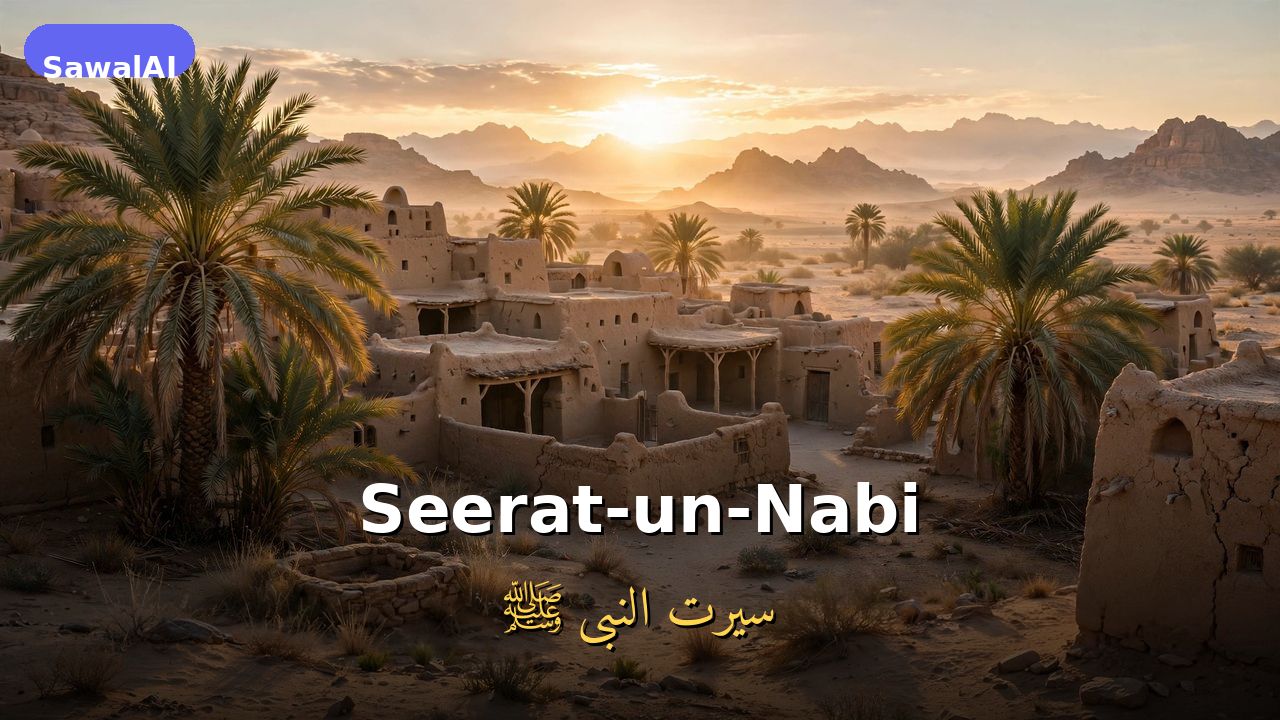
The Seerat-un-Nabi — the life of Prophet Muhammad (peace be upon him) — is one of the most carefully recorded lives in human history. Born in Makkah in the Year of the Elephant (570 CE), he grew from an orphaned child into a merchant known for his honesty, then into the final Messenger whose life reshaped Arabia and inspires over a billion people today. His biography is not only a story of events, but a living example of mercy, patience, and character — and its lessons remain deeply relevant today.
Birth and Early Life in Makkah
Born to Aminah and Abdullah in 570 CE, Muhammad lost his father before birth and his mother at the age of six. He was raised by his grandfather Abdul Muttalib and then his uncle Abu Talib. As a young man he worked as a merchant and earned the title Al-Amin — "the Trustworthy" — for his honesty. He married Khadijah, a respected businesswoman, who became his greatest supporter.
The First Revelation
At the age of 40, Muhammad (peace be upon him) often retreated to the cave of Hira for reflection. There, in Ramadan (610 CE), the angel Jibreel brought the first revelation — the command "Iqra" — "Read" — the opening verses of Surah Al-Alaq. Shaken, he returned home to Khadijah, who comforted him and believed in him.
Years of Persecution and Patience
In Makkah he preached for thirteen years, calling people to worship one God and to treat the weak with justice. The Quraysh answered with boycott, ridicule, and cruelty toward him and his followers — yet he never answered hatred with hatred. Some companions migrated to Abyssinia. His patience through suffering became a model of standing firm without losing mercy.
The Hijrah and the Building of Madinah
In 622 CE, he migrated to Madinah — the Hijrah — marking the start of the Islamic calendar. The people of Madinah, the Ansar, welcomed the migrants, the Muhajirun, and shared their homes and wealth. He built the mosque as the heart of the community and established the Charter of Madinah, one of history's earliest written agreements of coexistence between Muslims, Jews, and other tribes.
Forgiveness, Character, and Timeless Lessons
After years of conflict, when Makkah opened to him in 630 CE, he declared a general amnesty — even for his fiercest enemies. His Farewell Sermon (632 CE) proclaimed the equality of all people, the rights of women, and the sanctity of life and property. He passed away that same year in Madinah. His legacy is mercy: honesty in dealings, kindness to the weak, forgiveness of enemies, and devotion to one God.