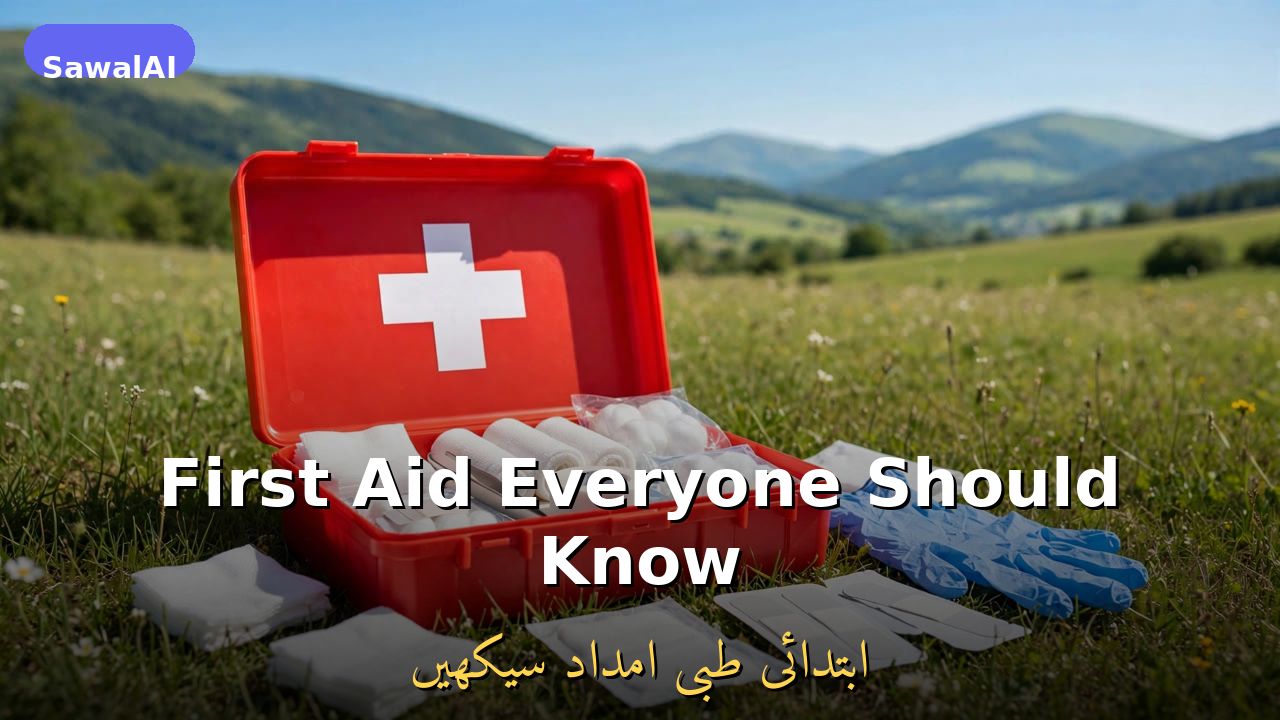
In a real emergency, the first few minutes matter more than anything else. An ambulance can take ten minutes to arrive — but brain damage starts in four to six. You do not need to be a paramedic to save a life; you just need a handful of simple skills and the confidence to use them. This guide covers the four situations you are most likely to face: cardiac arrest, severe bleeding, burns, and choking.
1. CPR: Push Hard and Fast in the Center of the Chest
If someone collapses and is not breathing normally, call emergency services first, then start chest compressions immediately. Place the heel of your hand in the center of the chest, push straight down about 5–6 cm, and keep a rhythm of 100–120 pushes per minute. Hands-only CPR is perfectly fine for bystanders — doing something is always better than doing nothing.
2. Severe Bleeding: Pressure Stops Blood Loss
Uncontrolled bleeding can be fatal within minutes. Press a clean cloth or bandage firmly and continuously onto the wound — do not lift it to "check." If blood soaks through, add more material on top. For a limb that will not stop bleeding, a tight band above the wound can save a life. Never remove an embedded object — pad around it instead.
3. Burns: Cool It, Don't Cream It
For minor burns, cool the burn under cool running water for at least 20 minutes as soon as possible. Never apply butter, oil, ice, or toothpaste — they trap heat and worsen damage. Cover loosely with cling film or a clean cloth, and seek urgent care for serious burns (white or charred skin, large area, face or joints). Drink water afterwards: burns dehydrate the body.
4. Choking: The Heimlich Maneuver in 30 Seconds
If an adult is choking and cannot cough, speak, or breathe, stand behind them and pull sharply inward and upward just above the navel — repeat until the object comes out. First try up to five firm back blows between the shoulder blades. For babies under one, alternate five back slaps with five gentle chest thrusts.
Stay Calm, Call for Help, Learn More
Emergencies are frightening, but panic helps no one. Take one breath, call your local emergency number, and act — one clear-thinking bystander changes everything. Consider taking a certified first-aid course in your area: an hour of hands-on practice beats a hundred pages of reading. And keep a basic first-aid kit — plasters, gauze, antiseptic, gloves — at home, in your car, and at work. Prepared people save lives.